Germany's Cannabis Legalisation Backfires as Black Market Thrives in Brandenburg
Two years after Germany's partial legalisation of cannabis, Brandenburg's Interior Minister Jan Redmann has admitted the policy has failed to weaken the black market. Despite the introduction of non-commercial cultivation clubs, demand far outstrips supply, leaving illegal dealers dominant. Meanwhile, traffic incidents linked to cannabis use have risen sharply in the state. The law, which came into force on 1 April 2024, permits adults over 18 to possess and consume cannabis under strict rules. It also allows non-profit cultivation clubs—limited to 500 members—to grow and distribute the drug exclusively to their registered users. In Brandenburg, 21 such associations have been approved, with six more applications pending. Inspections so far have found no violations or fines.
Yet supply remains critically low. Nationwide, only around 150 clubs received provisional approvals by early 2025—far below the estimated 1,000 needed to serve Germany's 4-5 million regular users. Brandenburg mirrors the national shortfall, though regional differences exist. Berlin, for example, has over 40 applications, while rural areas lag behind. Enforcement also varies, with stricter THC testing in states like Bavaria.
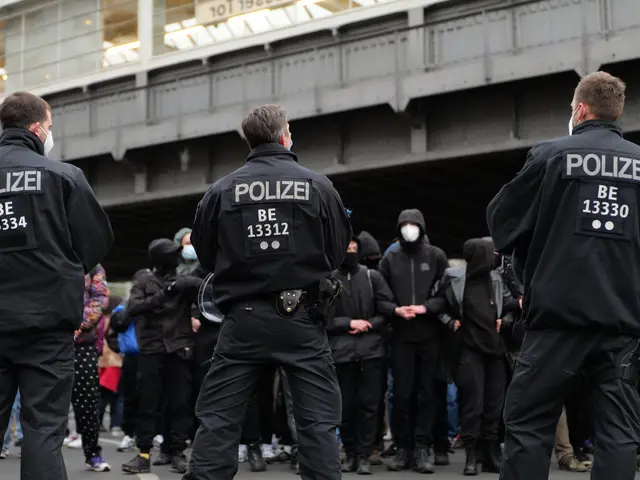
The consequences of legalisation have been mixed. While no breaches were found in Brandenburg's clubs, the Interior Ministry reports that illegal networks continue to thrive. Worse, they now use legalisation as cover to push more dangerous drugs. Traffic data further highlights the challenges: cannabis-related driving offences jumped by 31.5% in 2025, from 1,313 to 1,727 cases. Impairment-linked accidents also rose slightly, from 115 in 2024 to 119 in 2025.
Political opposition has grown in response. In February, Brandenburg's CDU voted to reverse the law entirely, arguing it has worsened rather than improved the situation. The partial legalisation has so far failed to curb the black market or meet consumer demand. With traffic incidents climbing and illegal dealers still dominant, Brandenburg's CDU is pushing for a full repeal. The state's experience reflects broader national struggles, as supply shortages and enforcement gaps persist.
Read also:
- American teenagers taking up farming roles previously filled by immigrants, a concept revisited from 1965's labor market shift.
- Weekly affairs in the German Federal Parliament (Bundestag)
- Landslide claims seven lives, injures six individuals while they work to restore a water channel in the northern region of Pakistan
- Escalating conflict in Sudan has prompted the United Nations to announce a critical gender crisis, highlighting the disproportionate impact of the ongoing violence on women and girls.