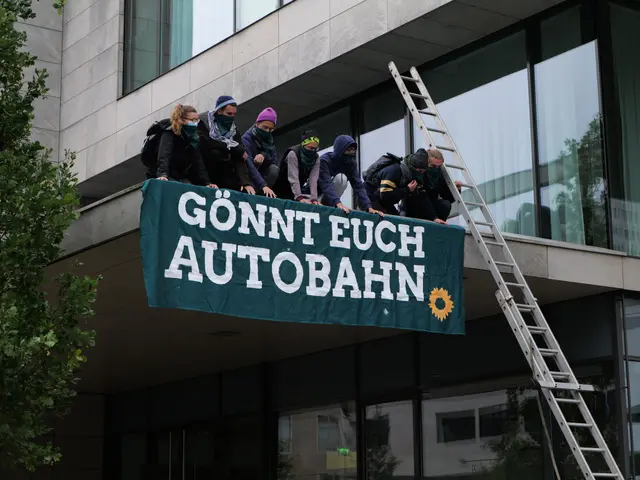
Veit sees need for reform in popular legislation - Hamburg's dual referendums spark calls for sweeping democracy reforms
Hamburg's Citizens Called to the Polls for Two Referendums—Now the City's Parliament President Calls for Reform
In October, Hamburg's voters were summoned to the ballot box for two referendums—the first time in years the city had held multiple such votes in a single month. Now, in the aftermath, the president of the Bürgerschaft (Hamburg's state parliament) is scrutinizing the process.
Bürgerschaft President Carola Veit sees a need for reform in Hamburg's direct democracy procedures following the recent referendums. She suggested that foreign funding could be banned in the future and that initiatives receiving large donations should be required to disclose them earlier and with greater transparency. In an interview with Welt am Sonntag (Hamburg regional edition), she outlined potential changes.
The proposals come in response to the "Hamburg Future Decision" and the "Hamburg Tests Basic Income" referendum, both of which received substantial donations from outside the city—some even from abroad—according to their financial reports. While voters approved the Future Decision in October 2023, the basic income trial failed to gain support.
"Same Democratic Rules for Initiatives and Parties"
"Anyone seeking to exert political influence must adhere to the same democratic rules that govern parties," Veit told WamS. She emphasized that early and reliable disclosure requirements are "essential to ensuring transparency."
Under her proposal—modeled on Germany's Political Parties Act—donations of €2,500 or more would have to be reported by name, with larger sums published immediately. "Direct democracy shapes binding political decisions and enacts laws," Veit argued. "For that reason, any attempt to influence voters' opinions must be public and traceable."
Against a Neutrality Obligation for the Senate
Veit also identified a second area in need of reform. Like Mayor Peter Tschentscher (SPD), she opposes imposing a strict neutrality requirement on Senate members ahead of referendums.
"The Senate should be allowed to inform the public and take positions at every stage of the referendum process," she said. While officials must adhere to constitutional standards of objectivity, she stressed that this should not be confused with a blanket neutrality rule.
Though Hamburg's referendum law does not explicitly mandate neutrality, the principle effectively arises from the law's equal treatment clause and rulings by the Hamburg Constitutional Court.
Tschentscher had previously criticized the system after the successful Future Decision, arguing that he had been barred from openly expressing his opposition. He called this a "weakness in Hamburg's referendum law" and urged the Bürgerschaft to amend it.
Read also:
- American teenagers taking up farming roles previously filled by immigrants, a concept revisited from 1965's labor market shift.
- Weekly affairs in the German Federal Parliament (Bundestag)
- Landslide claims seven lives, injures six individuals while they work to restore a water channel in the northern region of Pakistan
- Escalating conflict in Sudan has prompted the United Nations to announce a critical gender crisis, highlighting the disproportionate impact of the ongoing violence on women and girls.