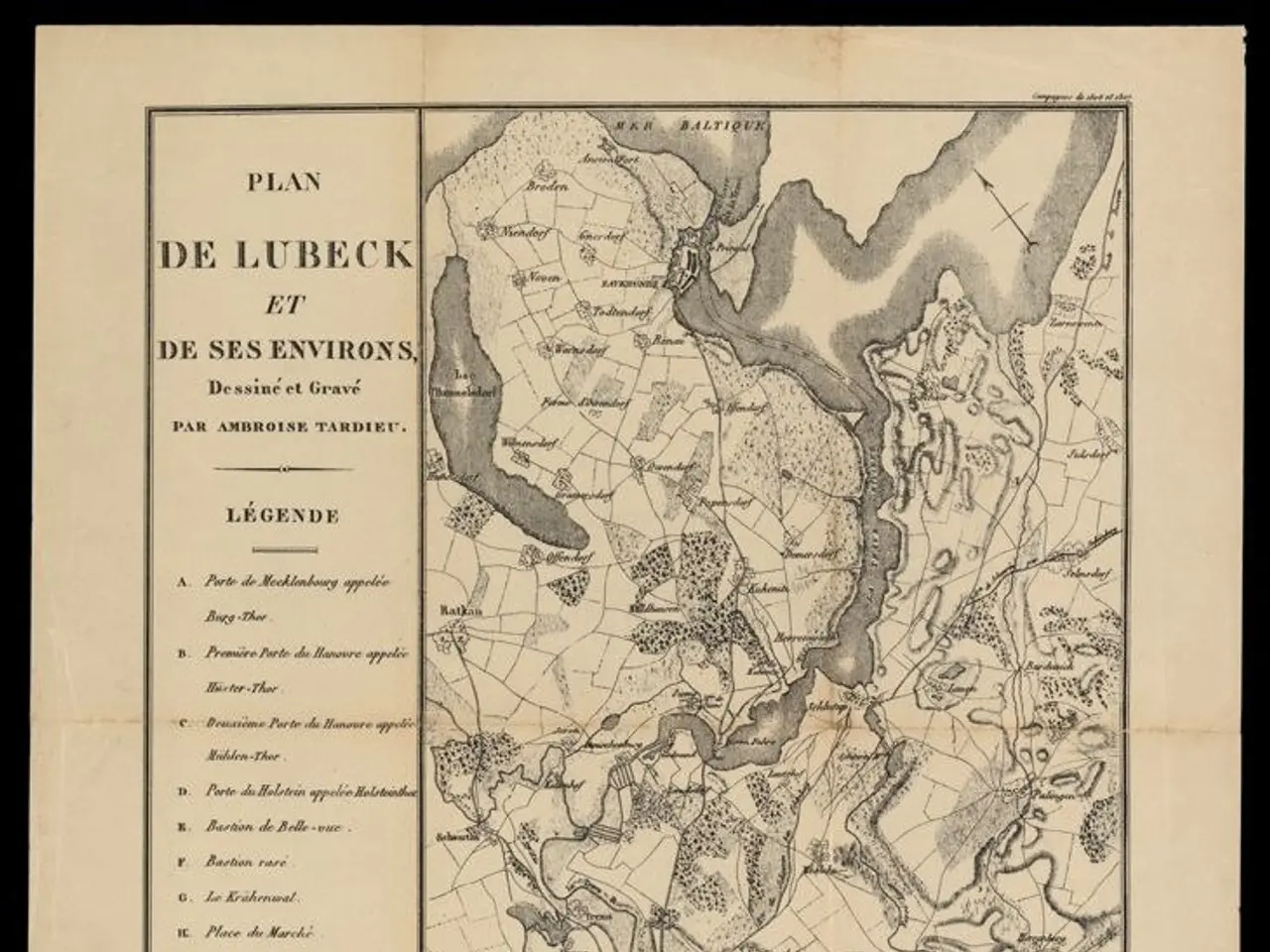
Lübeck in 1911: A Port City Balancing Trade and Transformation
1911: Lübeck's Rise as a Trading Hub with Modern Port Expansion
This year, we look back at 1911—a pivotal moment when Lübeck solidified its reputation as a key commercial city, driven by upgraded port infrastructure and surging trade.
Cranes, Quays, and Booming Cargo Traffic
In 1911, Lübeck's harbor underwent further technological advancements. New steam-powered cranes were introduced, and quay facilities were modernized, significantly speeding up cargo handling. Trade with Russia and Scandinavia flourished, with grain, timber, and coal among the most important commodities.
At the same time, the port's rail connections were expanded, improving the critical link between ships and trains. These upgrades strengthened Lübeck's competitive edge against major ports like Hamburg and Kiel.
The year also saw debates over establishing an independent port authority, which would take on new responsibilities. The proposal was a recurring topic in city council meetings and sparked widespread public interest. Discussions, public events, and repeated coverage in the local press kept the issue in the spotlight.
Beyond economic progress, Lübeck's cultural scene was also thriving. New exhibitions at the Museum am Dom and a vibrant calendar of musical events enriched city life. In 1911, Lübeck emerged as a city in transition—rooted in tradition yet increasingly embracing the global economy.
Read also:
- American teenagers taking up farming roles previously filled by immigrants, a concept revisited from 1965's labor market shift.
- Weekly affairs in the German Federal Parliament (Bundestag)
- Landslide claims seven lives, injures six individuals while they work to restore a water channel in the northern region of Pakistan
- Escalating conflict in Sudan has prompted the United Nations to announce a critical gender crisis, highlighting the disproportionate impact of the ongoing violence on women and girls.