Over 1.6 Million Syrian Refugees Return Home as Germany Holds Firm on Asylum Policies
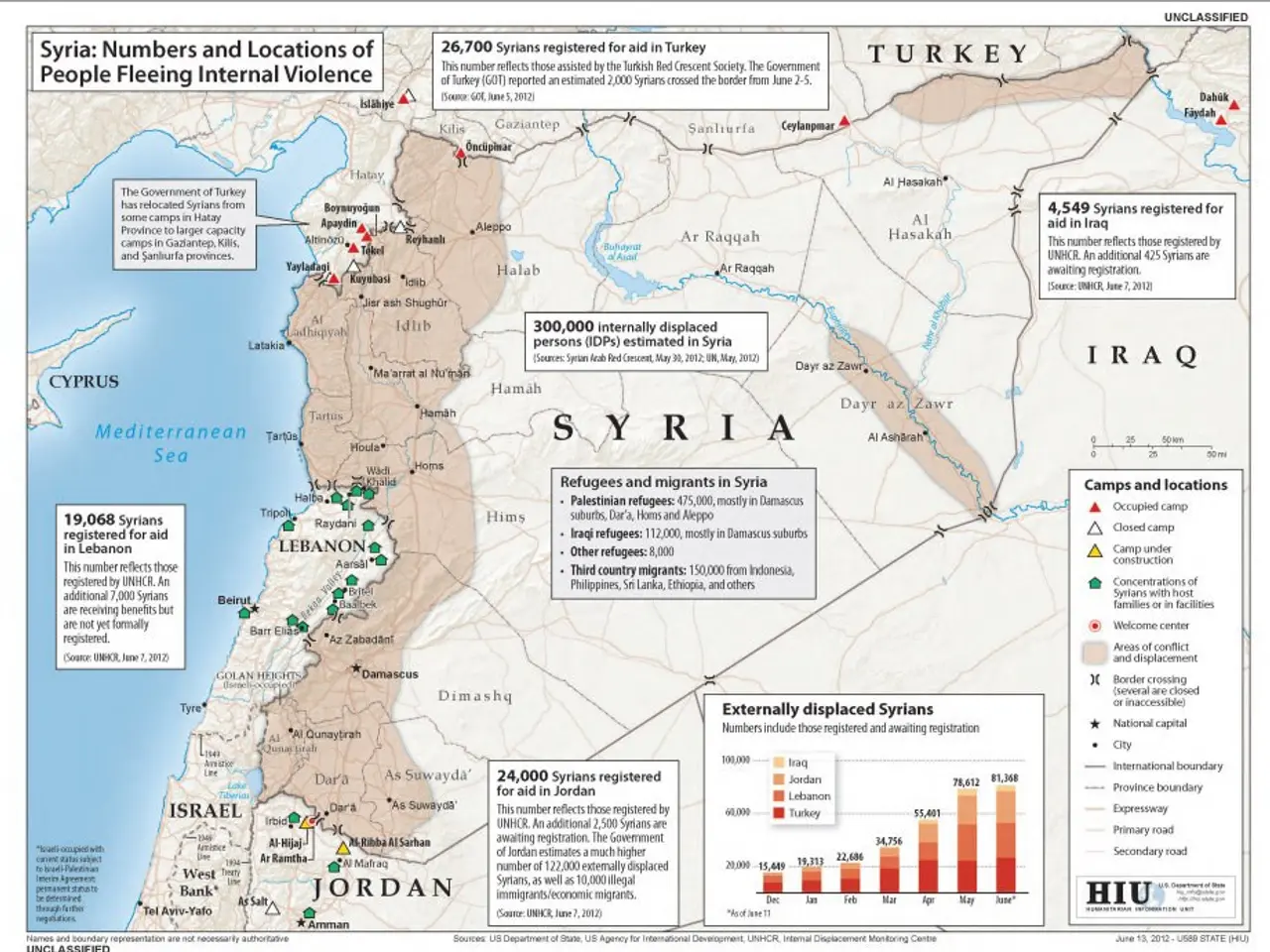
Over 1.6 million Syrian refugees have returned home since the Assad regime fell in December 2024. The UNHCR reports that most returnees came from Turkey, Lebanon, and Jordan, with smaller numbers from other nations, including Germany. Meanwhile, German authorities remain cautious about reassessing protection statuses for Syrian asylum seekers already in the country. The largest waves of returns came from neighbouring countries. By April 2026, 634,000 Syrians had gone back from Turkey, 621,000 from Lebanon, and 284,000 from Jordan. Germany accounted for around 6,100 returnees, grouped under an 'Other Countries' category.
The German Federal Office for Migration and Refugees (BAMF) has not yet launched widespread revocation reviews for Syrian protection statuses. Currently, cases are only re-examined individually—such as after unauthorised trips to Syria or serious criminal convictions. BAMF insists that any broader review would require lasting, significant improvements in Syria’s security and living conditions.
A recent BAMF report notes fewer conflict-related deaths and incidents, but it highlights ongoing economic hardship and humanitarian crises. The agency has not set a timeline for expanding revocation procedures, stressing that conditions on the ground remain unstable.
Political views on the issue differ sharply. Alexander Throm, domestic policy spokesperson for the CDU/CSU, argues that many Syrians no longer need protection and calls for systematic reviews. In contrast, Sebastian Fiedler of the SPD prioritises deporting criminals and supports voluntary returns over mass revocations. While returnees continue to leave neighbouring countries, Germany’s approach to Syrian asylum cases remains unchanged. BAMF maintains its case-by-case policy, awaiting clearer signs of stability in Syria. For now, no large-scale reassessment of protection statuses is planned.
Read also:
- American teenagers taking up farming roles previously filled by immigrants, a concept revisited from 1965's labor market shift.
- Weekly affairs in the German Federal Parliament (Bundestag)
- Landslide claims seven lives, injures six individuals while they work to restore a water channel in the northern region of Pakistan
- Escalating conflict in Sudan has prompted the United Nations to announce a critical gender crisis, highlighting the disproportionate impact of the ongoing violence on women and girls.