Bergisch Gladbach rethinks bicycle streets after court ruling on key cycling route
Bergisch Gladbach is reviewing its approach to bicycle streets after a recent court ruling. The city, known for its high number of commuters, aims to balance transport options for all road users. The SPD has backed the administration’s decision to pause three existing bike routes while further traffic studies are carried out. The debate follows a Cologne Administrative Court ruling on the bicycle street in Hasenweg. This section forms part of the F2 cycling route, a key link in the city’s expanding network. The court found that some required traffic data was missing when the route was established.
The SPD stresses that the ruling does not invalidate Bergisch Gladbach’s wider mobility policy. Klaus W. Waldschmidt, chair of the SPD council group, argues for a modern approach that avoids pitting drivers against cyclists. Instead, he supports policies that benefit everyone, including those who switch from cars to buses, trains, or bikes.
Andreas Herzig, the SPD’s newly elected transport spokesperson, shares this view. He prioritises smooth traffic flow for all modes of transport. The party continues to push for an intelligent mix where cycling, public transport, and cars each have their place.
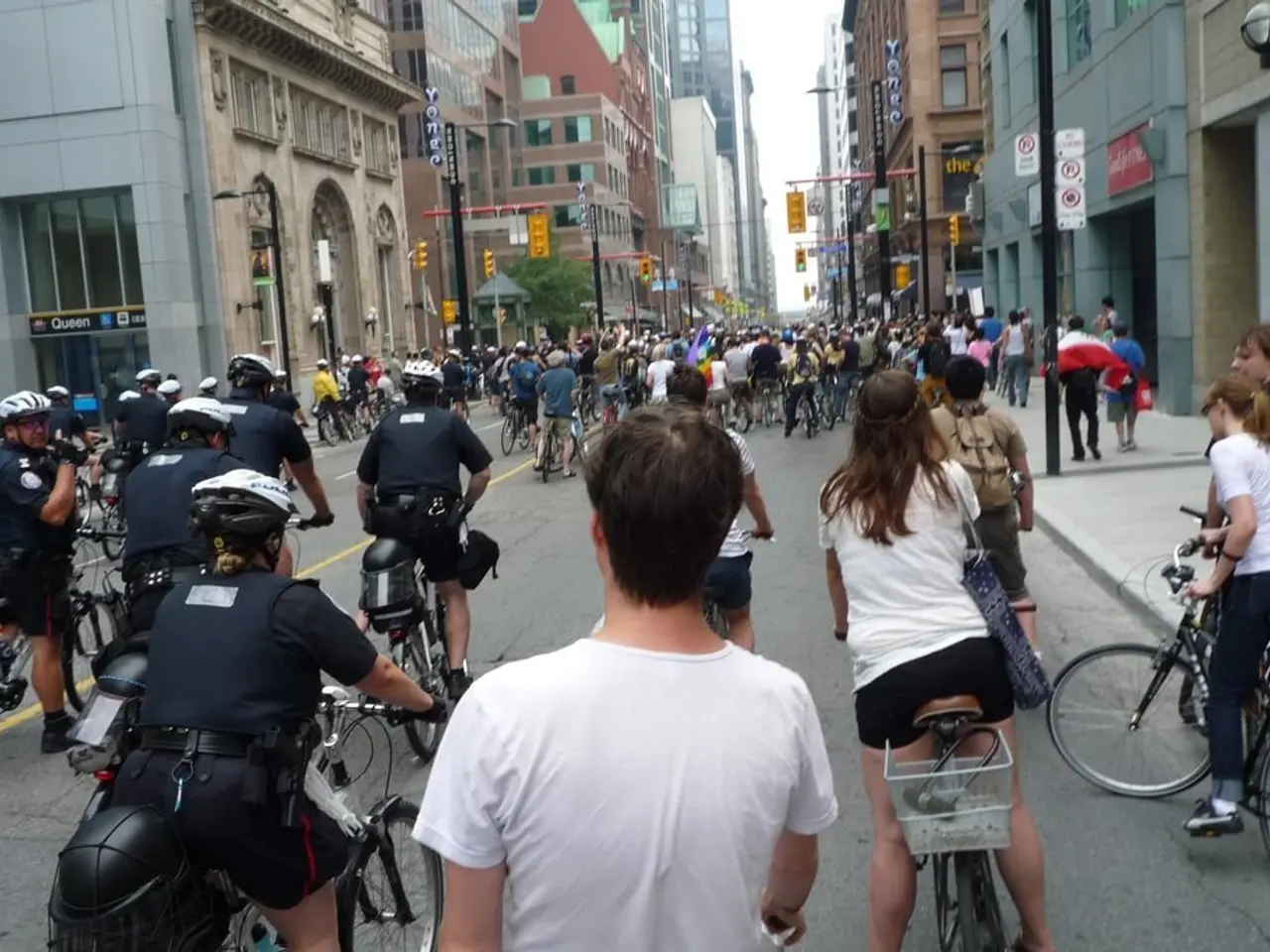
Attractive bike paths remain a key part of the plan. Well-designed routes help reduce congestion on main roads by encouraging more people to cycle. The SPD believes this balance is essential for a city with so many daily commuters. The suspension of the three bicycle streets allows time for proper traffic assessments. Once completed, the data will guide future decisions on cycling infrastructure. The city’s goal remains a transport system that works efficiently for all residents.
Read also:
- American teenagers taking up farming roles previously filled by immigrants, a concept revisited from 1965's labor market shift.
- Weekly affairs in the German Federal Parliament (Bundestag)
- Landslide claims seven lives, injures six individuals while they work to restore a water channel in the northern region of Pakistan
- Escalating conflict in Sudan has prompted the United Nations to announce a critical gender crisis, highlighting the disproportionate impact of the ongoing violence on women and girls.