Berlin Court Blocks 'Extremist' Label for Pro-Palestinian Jewish Group
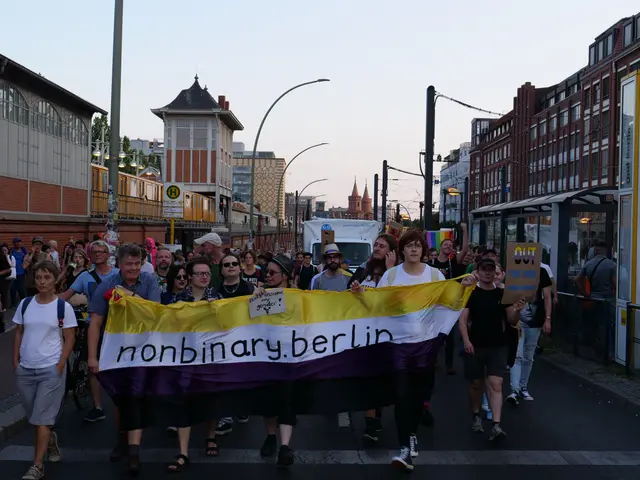
A Berlin administrative court has ruled that the left-wing group Jewish Voice for a Just Peace in the Middle East cannot be classified as "confirmed extremist" in Germany's 2024 domestic intelligence (Verfassungsschutz) report. The judges argued that expressions of opinion do not constitute preparation for violence and that a lack of sympathy for Israeli victims of terrorism does not amount to incitement.
The court's interim injunction is a welcome decision, as it limits the intelligence agency's ability to marginalize legitimate political discourse. However, the ruling does not grant carte blanche for glorifying terrorism. The judges hinted that the group's success in this case may be short-lived if future reports include more extreme statements. Even if Jewish Voice—which rejects Zionism as "racist"—shows no further radicalization, the Interior Ministry could still attempt to classify it as a "suspected case" in the next assessment. While this would make legal challenges less likely, it would do little to reduce the stigma.
Surprisingly, the court did not address the group's support for the Boycott, Divestment, and Sanctions (BDS) movement, despite this being a key reason for its inclusion in the intelligence report. In 2024, the Verfassungsschutz had, for the first time, labeled BDS groups as "confirmed extremist" for questioning Israel's right to exist.
The court likely assumes that BDS, as a nonviolent campaign, does not yet meet the threshold for extremism—a point the judges could have made explicitly. It remains to be seen whether the full written reasoning, once published, will offer clearer guidance. While not a definitive ruling, the decision contributes to an increasingly urgent debate on free speech—one that shows no signs of slowing down.
Read also:
- American teenagers taking up farming roles previously filled by immigrants, a concept revisited from 1965's labor market shift.
- Weekly affairs in the German Federal Parliament (Bundestag)
- Landslide claims seven lives, injures six individuals while they work to restore a water channel in the northern region of Pakistan
- Escalating conflict in Sudan has prompted the United Nations to announce a critical gender crisis, highlighting the disproportionate impact of the ongoing violence on women and girls.