Controversial high-rise project tests Bergisch Gladbach's Bau-Turbo fast-track rules
A Narrow Green Strip and Parking Lots Separate Körtener Straße from the Strundepark Commercial and Shopping Center—Where a Developer Plans a Massive Housing Project Using "Fast-Track Construction" Rules
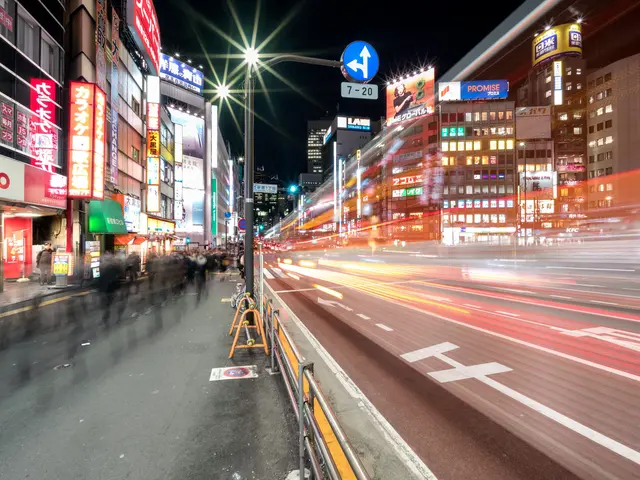
A slender strip of greenery and a parking lot separate Körtener Straße from the Strundepark commercial and retail complex at the eastern edge of Bergisch Gladbach's city center. Now, a developer wants to build over those parking spaces—with an unusually long and towering double-block residential structure—and bypass all standard restrictions using Germany's so-called Bau-Turbo ("fast-track construction") regulations.
When the Urban Planning and Development Committee convenes for its next meeting, members will face a proposal unlike any before them. For the first time, an investor seeks to construct housing and commercial units above existing parking spaces—a novel approach in Bergisch Gladbach. Even more unprecedented is the plan to exploit the relaxed rules of the Bau-Turbo, a fast-track approval process designed to accelerate construction. The result? A dual-building complex stretching 100 and 50 meters in length, with a height of 26 meters—making it one of the largest developments in the area.
According to committee documents, the new structure would run from the roundabout at the end of Hauptstraße, between the Lidl and Aldi discount stores and the Am Heiligenstock high-rise, along Körtener Straße nearly all the way to the second entrance of the Strundepark/Lochermühle industrial zone.
The two building wings would be interrupted only by a 220-year-old blood beech tree and a transformer station. Plans call for an eight-story structure: the ground floor would remain open for parking, topped by one level of above-ground parking, four floors of residential and commercial units, and two additional staggered upper stories.
While the proposal does not specify exact floor areas, a width of over 21 meters would alone yield a footprint of 3,000 square meters. City officials note that, in scale, the project would be surpassed only by the residential parks in Gronau and Bockenberg.
Under existing regulations, the city's preliminary assessment concludes, such a building would normally be ineligible for approval. Its sheer size would clash with the surroundings, and residential use in what is effectively an industrial zone is not permitted. Yet the Bau-Turbo—with its significantly loosened requirements—could change that.
In a separate submission to the committee, the city administration outlines its own conditions for applying the Bau-Turbo in Bergisch Gladbach, including a stipulation that it should not be used in commercial zones like Lochermühle.
Officials also warn that approving a 26-meter-tall structure could set a precedent for the entire area, making it nearly impossible to reject similar projects in the future. The eastern entrance to the city and the Strundorf district are already under considerable strain—and directly across the street on Hauptstraße, a large refugee shelter is slated for construction.
Even under Bau-Turbo rules, the city could still influence the project's design by requiring the as-yet-unknown developer to sign an urban development agreement. Additionally, in line with the municipal land-use resolution, the project would have to include at least 30 percent social housing.
In an initial evaluation, the administration does not rule out approval—but insists the commercial component must be significantly reduced or eliminated entirely. If greenlit, the city also recommends downsizing the overall volume and involving the design review board.
The final decision rests with the politically appointed Urban Planning Committee, which may choose to approve, modify, scale back, or reject the proposal. The project is set for discussion on March 5.
Read also:
- American teenagers taking up farming roles previously filled by immigrants, a concept revisited from 1965's labor market shift.
- Weekly affairs in the German Federal Parliament (Bundestag)
- Landslide claims seven lives, injures six individuals while they work to restore a water channel in the northern region of Pakistan
- Escalating conflict in Sudan has prompted the United Nations to announce a critical gender crisis, highlighting the disproportionate impact of the ongoing violence on women and girls.