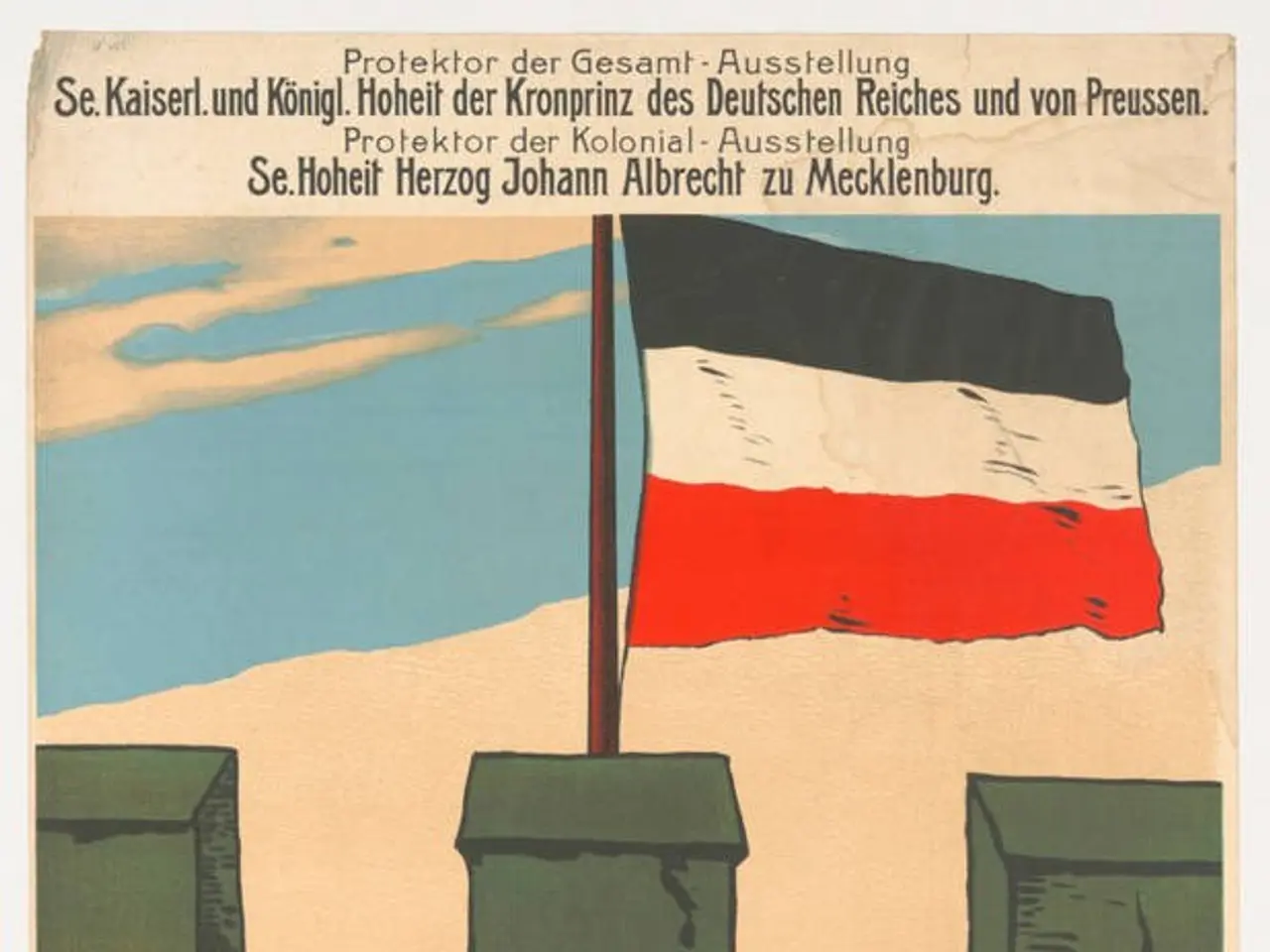
Germany's 1926 flag dispute exposed Weimar's deep political fractures
In May 1926, Germany’s flag dispute reached a turning point when Reich President Paul von Hindenburg issued a new ordinance. The move aimed to settle a bitter divide over national symbols that had split the country for years. At stake were two competing designs: the black, red, and gold of the Weimar Republic, and the black, white, and red of the former empire.
The conflict had deepened by the 1925 presidential election, with political factions forming rigid blocs around each set of colours. Hindenburg’s decision followed a push from the right, but it also triggered a swift backlash from the left and centre, uniting them behind the republican flag.
The dispute began with a motion from the German People’s Party (DVP), which called for restoring the imperial black, white, and red. Nonpartisan Chancellor Hans Luther, responding to the DVP’s demand, proposed a compromise to Hindenburg. The president then issued the Second Flag Ordinance on May 5, 1926.
The decree required German diplomatic missions outside Europe to fly both the republican black, red, and gold and the merchant flag—a hybrid of the two schemes. This dual display was meant to ease tensions, but it only sharpened divisions. The left and centre saw it as an attack on the republic’s legitimacy, while the right viewed it as a partial victory. Edwin Redslob, the Reich Art Commissioner, had earlier been tasked with designing a unified 'Reich flag'. His proposal—a red and yellow field with a black Balkenkreuz—failed to gain support. The National Assembly instead brokered a different compromise: black, red, and gold for the national flag, with the merchant flag incorporating elements of both. By May 9, Hindenburg attempted to calm the uproar with an open letter. He urged a constitutional solution that could reconcile the opposing sides. Yet the damage was done. The flag dispute had already hardened into a standoff between the 'Black-Red-Gold People’s Bloc' and the 'Black-White-Red Imperial Bloc', reflecting deeper political fractures in Weimar Germany.
The Second Flag Ordinance did not resolve the conflict but instead exposed the depth of Germany’s political divisions. Diplomatic posts flew both flags, yet the split between republican and imperial symbols remained. The episode highlighted how even national symbols could become battlegrounds in the fragile democracy of the Weimar Republic.
Read also:
- American teenagers taking up farming roles previously filled by immigrants, a concept revisited from 1965's labor market shift.
- Weekly affairs in the German Federal Parliament (Bundestag)
- Landslide claims seven lives, injures six individuals while they work to restore a water channel in the northern region of Pakistan
- Escalating conflict in Sudan has prompted the United Nations to announce a critical gender crisis, highlighting the disproportionate impact of the ongoing violence on women and girls.