Germany's Climate Contradictions Exposed Ahead of Colombia Summit
One Climate Summit Ends, Another Begins: Global Push to Phase Out Fossil Fuels Kicks Off in Colombia
Starting tomorrow, representatives from over 45 nations will gather in Colombia to forge a plan for a coordinated global exit from fossil fuels.
Meanwhile, in Berlin, this week's Petersberg Climate Dialogue already set the stage for the discussions. On Wednesday, Chancellor Friedrich Merz struck an ambitious tone, emphasizing the need to expand renewable energy and reduce Germany's reliance on fossil fuels—particularly in light of the war in Iran. Yet he immediately tempered his own rhetoric, stressing that climate action must remain "in harmony with economic interests."
This focus on economic priorities is reflected in Germany's realpolitik: in recent months, the Economy Ministry has doubled down on gas while slowing the rollout of renewables—a poor warm-up act for the Colombia summit.
From Monday, Germany will be represented by Jochen Flasbarth, State Secretary at the Environment Ministry. When asked by CORRECTIV what concrete commitments the ministry could offer on phasing out fossil fuels, officials pointed to existing climate policies and national targets—but remained vague on new pledges. Flasbarth's goal in Colombia, they said, is to send "a clear political signal" and position Germany as part of a "coalition of doers" driving the global shift away from fossil fuels. The ministry also highlighted its own experiences, such as the Climate Protection Act, CO₂ pricing, the coal phaseout, and renewable energy expansion. The aim, according to a spokesperson, is to show investors worldwide that the transition to climate-neutral energy systems is "irreversible" and offers both energy security and geopolitical advantages. However, they noted that Germany's direct role in UN climate frameworks is limited, as the EU negotiates as a bloc.
Yet the Environment Ministry's aspirations clash with Germany's recent climate policy trajectory—largely shaped by Economy Minister Katherina Reiche's ministry. Far from a clear break with fossil fuels, Berlin is pushing ahead with new gas-fired power plants and boosting domestic gas extraction.
Even the coal phaseout is on shaky ground. Despite coalition agreements, politicians—including Merz himself—have suggested extending the lifespan of coal plants to safeguard energy supplies.
The government's response to the Iran war has only reinforced the perception of a fossil-fuel fixation. Rather than structural solutions to the energy crisis, officials slashed fuel taxes on diesel and gasoline. Jürgen Resch of the environmental NGO Deutsche Umwelthilfe told CORRECTIV that these policies serve the auto industry, not the public.
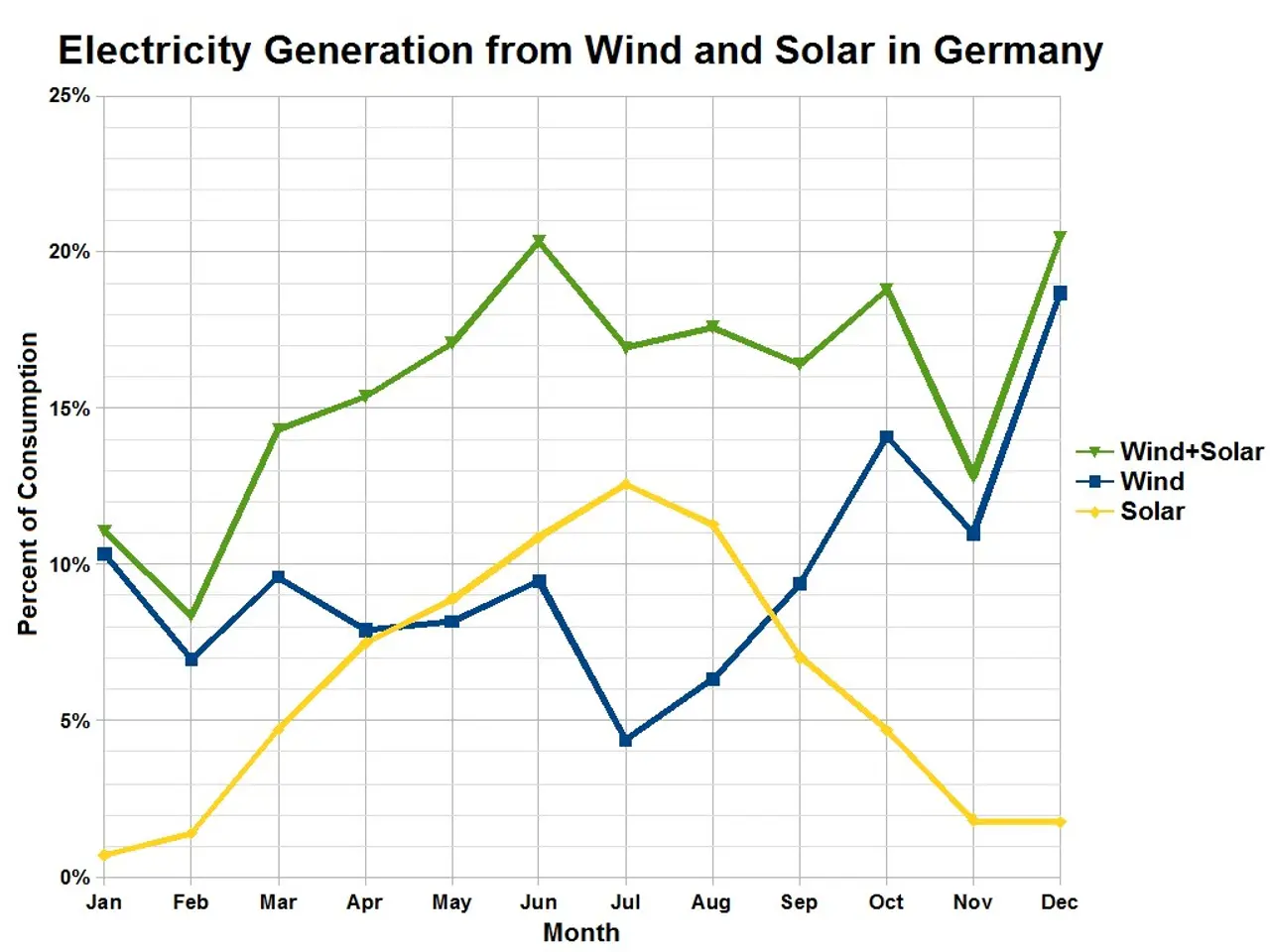
At the same time, the expansion of renewables has stalled. New drafts for the grid package and the Renewable Energy Act (EEG) reform, published this week, have drawn sharp criticism. The solar industry warns of an "energy transition freeze," with Carsten König of the German Solar Association cautioning that vast swaths of the country could become "no-go zones" for clean energy. The core issue: drastic cuts to renewable subsidies.
NGOs, too, are skeptical of Merz's bold rhetoric. Petter Lyden, head of international climate policy at Germanwatch, welcomed the chancellor's statements in principle but demanded action ahead of the Colombia summit: "In the coming weeks and months, Chancellor Merz must get specific—forging alliances for rapid electrification and renewables, presenting concrete figures on climate finance, and outlining how Germany will systematically phase out fossil fuels while supporting those hardest hit by the climate crisis."
Read also:
- Federal Funding Supports Increase in Family Medicine Residency Program, Focusing on Rural Health Developments
- Potential Role of DHA in Shielding the Brain from Saturated Fats?
- Alternative Gentle Retinoid: Exploring Bakuchiol Salicylate for Sensitive Skin
- Hanoi initiates a trial program for rabies control, along with efforts to facilitate the transition from the dog and cat meat trade industry.