Russia's Muravyov-Amursky 2030 program graduates 58 future Arctic leaders
Final Module of Muravyov-Amursky 2030 Program's Fourth Cohort Concludes in Yakutsk
The graduation module of the fourth cohort of the Muravyov-Amursky 2030 program has wrapped up in Yakutsk, according to the Khabarovsk Territory Today news agency. The initiative, implemented by Russia's Ministry for the Development of the Far East and Arctic in partnership with the Far East and Arctic Development Corporation (FEDC) and supported by partner universities, aims to cultivate young talent for the region.
"The Far East needs proactive young people ready to invest their energy in regional development," said Yuri Trutnev, Deputy Prime Minister of Russia and Presidential Envoy to the Far Eastern Federal District. "Training professionals who will strengthen the economy, implement social projects, launch new industries, and improve urban infrastructure is crucial. We need a significant number of individuals capable of thinking systematically. I am confident that the Muravyov-Amursky 2030 program will produce such specialists, reinforcing both the Far East and Russia as a whole."
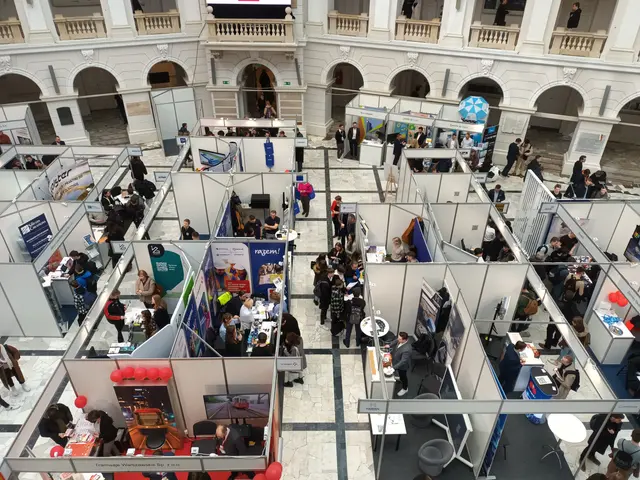
The final ninth module in Yakutsk featured an educational program led by experts, master classes, meetings with the leadership of the Republic of Sakha (Yakutia), and discussions on the Socioeconomic Development Strategy for the Far Eastern Federal District through 2030 (with projections to 2036), alongside representatives from the Vostokgosplan Federal Research Center. Participants also attended a job fair with HR departments from Far Eastern and Arctic regions.
Fifty-eight cadets successfully completed the program, with some already joining regional and municipal government agencies. The Khabarovsk Territory was represented by seven participants, including Yuri Kisil, a veteran of the special military operation and a graduate of the Heroes of the East project.
"What sets this program apart is that we don't tell participants they're special," emphasized Alexey Chekunkov, Minister for the Development of the Far East and Arctic. "Instead, we instill in them a commitment to public service, to long-term, sustained work for the benefit of the Far East, the Arctic, and Russia. We stress that meaningful change—change that improves people's lives—only comes through hard, professional, and deeply engaged effort. When people choose to live, work, and raise families in the Far East, that is priceless. This is why we launched the program."
The curriculum includes eight project tracks proposed by the regions, covering areas such as Arctic cruise tourism, digital infrastructure, and subsidized pharmaceutical provisions. The year-long training consisted of nine educational modules, culminating in project defenses.
Read also:
- American teenagers taking up farming roles previously filled by immigrants, a concept revisited from 1965's labor market shift.
- Weekly affairs in the German Federal Parliament (Bundestag)
- Landslide claims seven lives, injures six individuals while they work to restore a water channel in the northern region of Pakistan
- Escalating conflict in Sudan has prompted the United Nations to announce a critical gender crisis, highlighting the disproportionate impact of the ongoing violence on women and girls.